


Creep Testing Apparatus
Project Overview
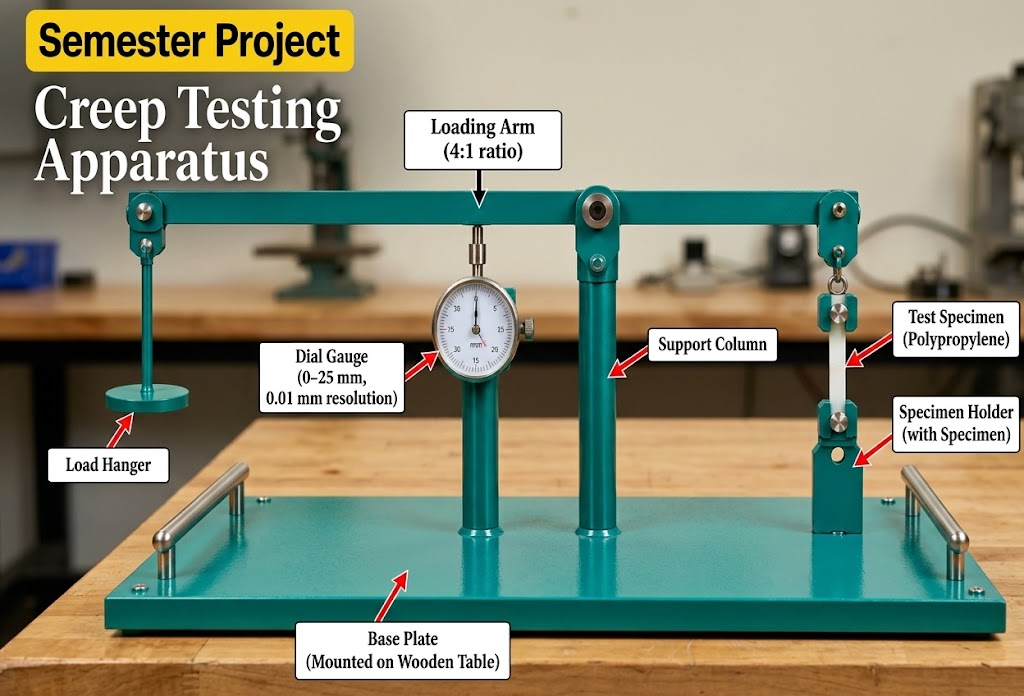
This project focuses on the design, development, and application of a bench-top Creep Testing Apparatus to investigate the time-dependent deformation (creep) of materials subjected to constant mechanical stress and varying temperatures. Understanding this phenomenon is critical for evaluating the long-term reliability and structural integrity of components used in extreme, high-stress environments, such as aerospace jet engines, power generation turbines, and oil and gas drilling equipment.
Key Components & Tools
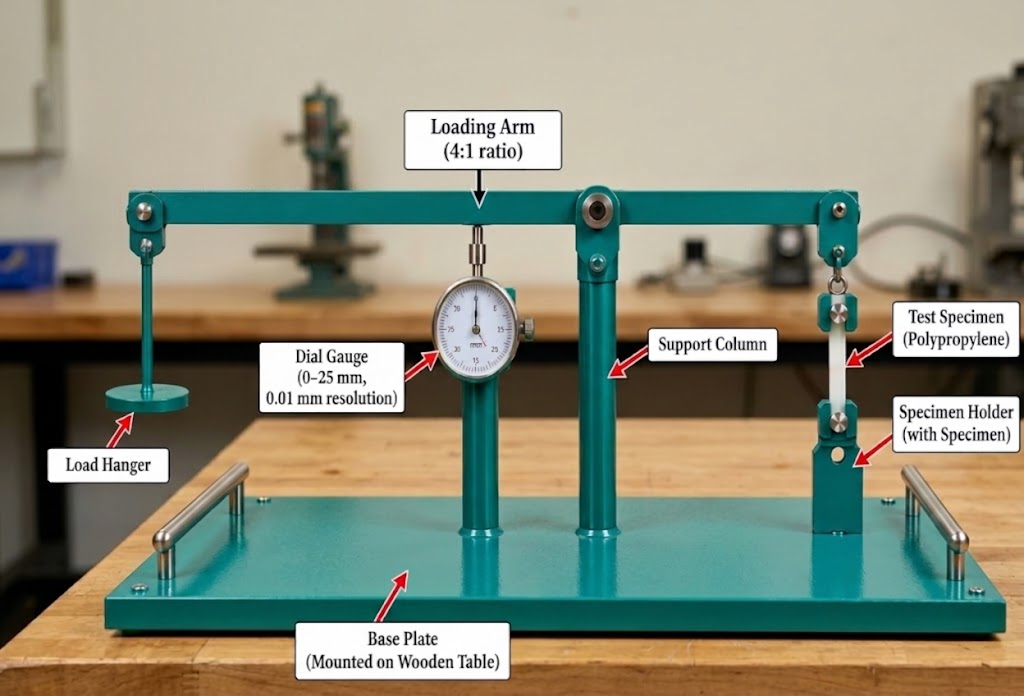
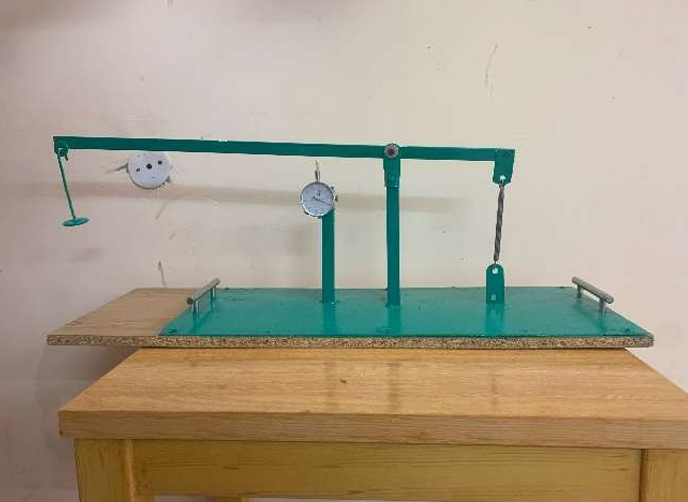
- Mechanical Structure: Engineered with a precisely balanced loading arm featuring a 4:1 loading ratio to transmit force accurately and consistently.
- Test Specimens: Configured to test Polypropylene material specimens with a 22mm gauge length and nominal dimensions of $4.8(W) \times 1.6(t)$ mm.
- Precision Measurement: Equipped with a high-resolution dial gauge (0-25mm range, 0.01mm resolution) to measure minute material extensions, paired with a thermometer for accurate thermal monitoring.
- Environmental Control: Features a transparent specimen enclosure that utilizes hot and cold packs to adjust and safely maintain specific testing temperatures.
Working Principle & Engineering Calculations
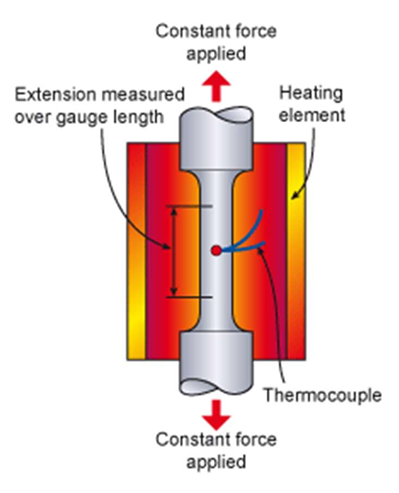
- The apparatus applies a continuous, constant mechanical load to a vertically mounted material specimen using specialized clamps designed to prevent any bending during the testing phase.
- The system facilitates the detailed observation of the three critical stages of material degradation: primary creep (decreasing strain rate), steady-state secondary creep, and tertiary creep (rapid strain leading to fracture).
- The material's creep rate is analytically calculated using the fundamental equation \(\dot{\epsilon} = \frac{\Delta L}{L \cdot \Delta t}\), mapping the deformation over specific time intervals.
Experimental Testing & Calculations
- Practical testing successfully validated that creep deformation is highly sensitive to thermal changes, with deformation rates increasing significantly at elevated temperatures
- The experiments effectively demonstrated the material's load-dependent response, proving that higher applied mechanical loads result in a directly proportional increase in continuous deformation
- The acquired data provided critical insights into how material composition and microstructure react under prolonged stress, aiding in more robust material selection for high-performance engineering designs
Conclusion
This project effectively demonstrates the core principles of mechanical engineering and gear dynamics. By successfully designing, assembling, and testing a manual transmission system, it provides a highly reliable, hands-on framework for understanding torque, power transmission, and efficiency losses in mechanical systems.
